

The Wake
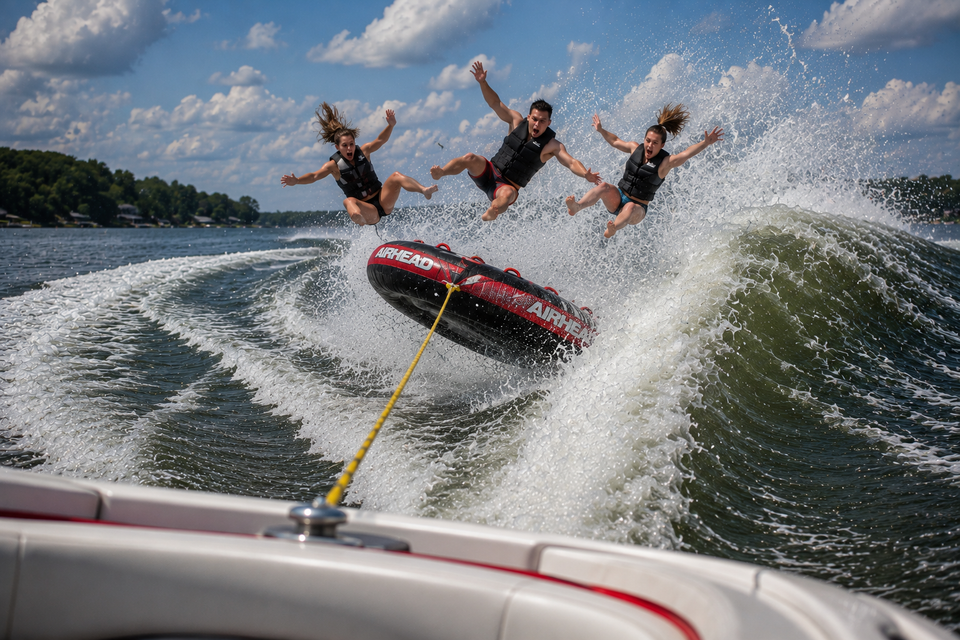
Bill Gordon, my boss for nearly thirty years, had a house on Table Rock Lake in southern Missouri. One weekend, many years ago, he took a group of us from the leadership team down for a getaway.
Saturday afternoon we spent hours on the water, and for a good stretch of it, Bill was pulling pairs or trios of us behind his boat on a tube. He’d get up to speed, keeping us in the calm center of the wake, safe and steady. After a few minutes, he’d start weaving, sending the tube jumping over the wake into open water. That part was a blast. Most of us could hang on even then.
Then he’d cut a hard, sharp turn. The tube would whip far outside the wake, and that same turn would drag us back across the boat’s original wake, colliding with the new one it was still creating. Every time, the waves threw us high enough into the air that holding on was impossible. We went flying, every single time.
We had a great time. All of us.
I didn’t know it then, but thinking back on that day, I realized something that had nothing to do with tubing at all.
Every leader creates a wake. Not by choice. That part is automatic. The only choice a leader actually gets to make is what kind of wake they leave for the people hanging on behind them.
But here’s what made that day on the lake different from a bad day at work: we trusted Bill completely. The uncertainty was the fun part, because underneath it, we never once doubted that he had our best interest in mind. Getting thrown from the tube wasn’t a risk. It was the whole point of the game.
At work, when a leader is unpredictable, there’s no lake underneath you. You’re not playing. You’re trying to do your job, provide for your family, build something that matters, and you have no idea which version of your leader is going to show up today. The uncertainty isn’t thrilling. It’s just exhausting.
A consistent, aligned leader creates a wake that’s safe to be in. People know what to expect. They trust what they’re being told. They feel secure enough to invest more of themselves, to bring their best instead of just enough to get by.
An inconsistent leader creates something different. People spend their energy just trying to stay on, instead of doing their best work. And eventually, the old wake collides with the new one, and some people get thrown.
For everyone in a leadership role, this begs the question: What kind of wake are you creating for those you lead?
Member discussion