

Be Quick, Don't Hurry
Every year I go to Cozumel for a week with four other guys. Same place, same dive shop, same divemaster most years. We dive Sunday through Friday, two tanks a day, and by Wednesday we’re usually settled into a rhythm that feels effortless.
Wednesday of our 2023 trip was when the regulator started lying to me.
We were in the middle of our second dive when I felt it, a strange sensation on an inhale, a different sound than normal, and the feeling that I hadn’t gotten quite all the air I should have. I checked my gauge. Over a thousand psi. Plenty of air. I took another breath and watched the gauge drop to under a hundred psi while I inhaled, then jump back up immediately after.
That’s not how gauges work.
I took a few more breaths. Everything seemed normal. The regulator was functioning fine. The gauge was reading correctly. Whatever had happened, it appeared to have resolved itself.
So I got back in line behind the group and continued the dive.
That decision made complete sense at the time. And it was the first thing I would do differently.
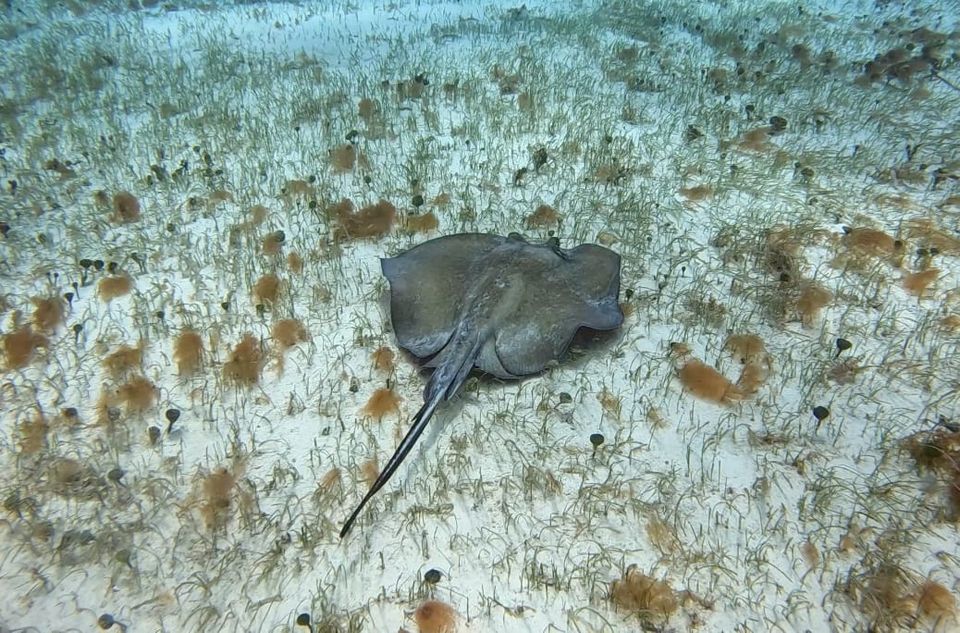
About forty minutes later we were off-gassing in a sandy bottomed area in about twenty-five feet of water. That’s when the stingray appeared.
I pulled out my GoPro and started swimming against the current to follow it. The shot was worth it. A big ray moving gracefully just beneath us, and I had about a minute of good footage before I went to take a breath and found nothing there.
I looked at my gauge. Zero psi.
It jumped back up above five hundred immediately.
I tried again. Nothing. Zero again.
I turned around to find the group. They had been drifting with the current while I drove against it, and they were now sixty to seventy-five meters away. I began swimming toward them steadily, not frantically, banging my camera rack against my tank to get someone’s attention. After the third or fourth series of bangs, Steve turned around. He saw me coming, signed to ask if I was okay, and I gave him the out of air signal.
He began fumbling for his backup regulator, which was tucked into the pocket of his buoyancy compensator. I reached him while he was still working to free it and waited. Fifteen seconds. It felt considerably longer than that. I had been holding my breath for somewhere around three minutes at that point, and I was beginning to genuinely need air.
He finally got it free. I took the sweetest breath of 35% Nitrox I have ever tasted.
Crisis averted.
Here’s what I want you to notice about those three minutes.
I never panicked.
Not because the situation wasn’t serious. A failed regulator at depth with your group sixty meters away and nothing in your lungs is no small problem. But panicking would have made it fatal. If I had thrashed toward the group at full speed, I would have burned through the breath I was holding faster than my body could manage it. I wouldn’t have made it to Steve with enough left to wait the fifteen seconds for him to free his backup.
Instead I swam steadily. Signaled clearly. Conserved what I had. Waited when I needed to wait.
I was quick. I didn’t hurry.
John Wooden said that first, and he said it about basketball. But I’ve never heard a more precise description of what the Anchor actually produces in a leader when it’s working correctly.
Quick is about the process. Hurry is about the anxiety driving it. In the water, those three minutes showed me the difference more clearly than I could ever explain it. I was moving the whole time. I just wasn’t thrashing.
Leaders face this moment frequently. The pressure of not having decided yet feels like a problem to solve. So they solve the discomfort by deciding, even when the decision isn’t ready. Hurrying eliminates the feeling of not knowing. It rarely eliminates the problem.
There’s one more thing about that dive worth saying.
The warning sign was there forty minutes before the regulator failed completely. The strange sensation, the gauge dropping to near zero and recovering, the momentary wrongness that resolved itself and seemed fine afterward.
I noted it. Checked it. Rationalized it. And went back to diving.
Looking back, chasing that stingray after a regulator had already given me a warning signal was probably not the smartest decision I have ever made. I got excited about the shot, went off on my own, swam hard against the current, separated myself from the group, and burned through my air faster than normal. All after the equipment had already told me something wasn’t right.
Leaders do this constantly.
A conversation that doesn’t land quite right. A metric that spikes and then recovers. A team member who seems off but bounces back. The warning sign gets noted, checked, and rationalized away because everything seems fine afterward. And then somewhere down the line, usually at the worst possible moment, the regulator fails completely.
The Anchor isn’t just for crises. It’s for the forty minutes before them too.
In Curaçao, I discovered the Anchor at 155 feet when I needed it most. I found a piece of coral and held on until my better judgment caught up with my panicked judgment.
In Cozumel, the Anchor was already there before the crisis arrived. Built in through training, experience, and enough honest reflection on what can go wrong to take it seriously before it does.
That’s the difference between a leader who finds their footing under pressure and one who built it long before the pressure arrived.
Embrace the Pause is the decision.
The Anchor is how you do it.
Be quick.
Don’t hurry.
Member discussion